
By Christine Greyling
A Divine Encounter at the Well
There are moments in Scripture where a single encounter changes everything. The story of the Samaritan woman at the well in John 4 is one of those powerful, transformative moments. It’s a story that reveals how Jesus meets us where we are, confronts us with truth, and calls us into a completely new life.
As I’ve reflected on this passage, I’ve been deeply moved by the journey this woman takes—from shame and hiding to becoming the first recorded evangelist in the Bible. Her story is our story, and it challenges us to consider what it means to truly encounter Jesus.
Jesus Meets Her Where She Is
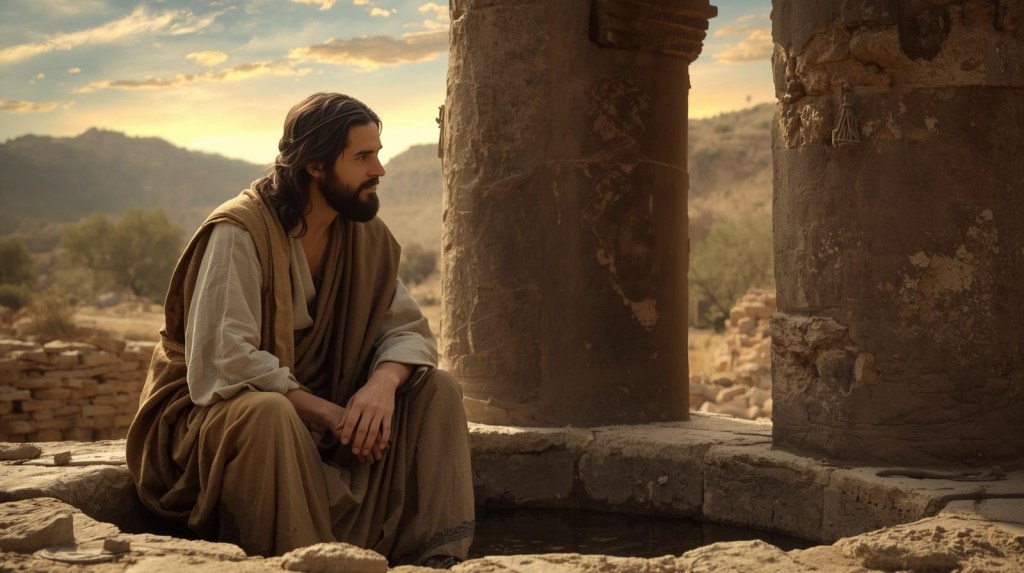
The account begins in John 4:7-9, where we find Jesus doing something radical—speaking to a Samaritan woman. This was scandalous on multiple levels. Jews didn’t associate with Samaritans, and Jewish rabbis certainly didn’t speak publicly with women, especially women with questionable reputations.
But Jesus met her at a time and place no one else would. She came to draw water in the heat of the day—likely to avoid the judgment and scorn of other women who would come in the cooler morning hours. She was living a life of shame, hiding from community, feeling unworthy and unaccepted.
When Jesus asked her for a drink, she questioned why He would even speak to her. Her response reveals the depth of her feelings of unworthiness. As a Samaritan living a compromising life, she considered herself “unworthy”—yet Jesus still came to her.
This is the beautiful truth: Jesus meets us where we are, no matter how undeserving we feel. Nothing is so bad or unforgivable that Jesus would reject you—not past abortions, addiction, drug abuse, or any other sin that weighs heavy on your heart. He sees you, He loves you, and He comes to you.
Struggling to Understand
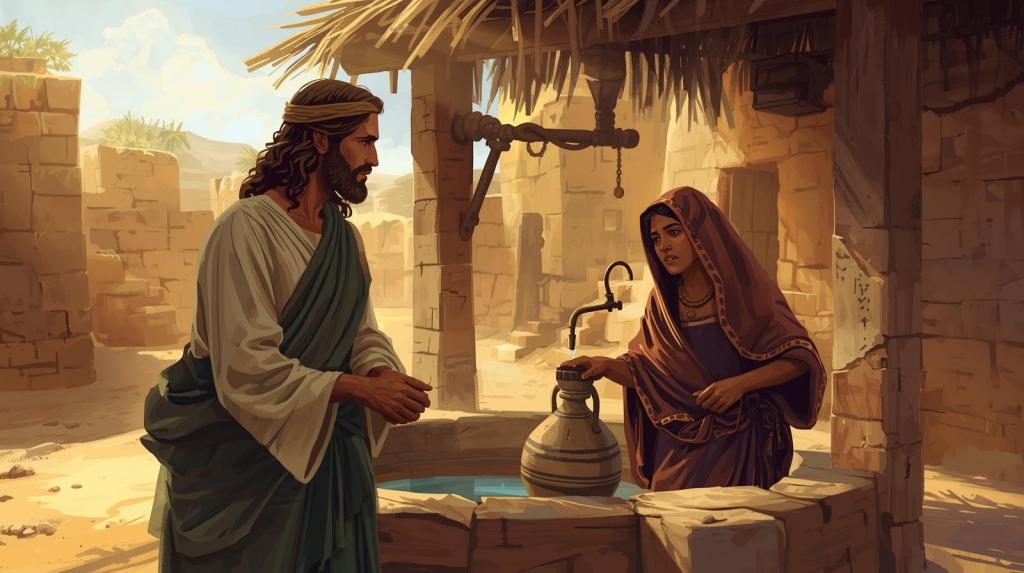
As the conversation continues in John 4:10-12, Jesus offers her living water. She doesn’t understand what He means. She’s thinking about literal water from the well, while Jesus is speaking of something far greater—something spiritual and eternal.
But here’s what I love about this woman: she doesn’t give up. She keeps questioning, keeps seeking. We often struggle to understand salvation and the things of God or the situations we find ourselves in. Many get frustrated and walk away when they don’t immediately comprehend. But this woman persists.
Scripture tells us to “lean not on your own understanding” (Proverbs 3:5). Don’t give up when you don’t understand—your turning point may be just around the corner. Keep asking, keep seeking, keep knocking.
The Spiritual Answer to Physical Needs
In John 4:13-14, Jesus answers her physical question with a spiritual answer. He tells her that everyone who drinks from Jacob’s well will thirst again, but whoever drinks the water He gives will never thirst—it will become a fountain of water springing up to eternal life.
We so often think our answers and solutions are physical—more money, a better job, a different relationship. But they’re always spiritual. We are more spiritual beings than physical beings. Jesus addresses her attempt at survival and self-preservation and says that self-salvation is futile and never-ending.
He is the answer. This is a call to salvation and trust. The well will never satisfy. Only Jesus can.
Taking Steps of Faith
In verse 15, the woman responds, “Sir, give me this water so that I will not be thirsty, nor come all the way here to draw water.” She probably didn’t fully understand what she was asking for. But she had met Christ and took a step of faith.
She sealed her future with salvation, likely unaware of the full extent of what that meant. But isn’t that how it works for all of us? We don’t fully comprehend the magnitude of salvation when we first say yes to Jesus. We just know we need Him.
Allowing Christ into our lives changes everything—our future, our eternity, and even future generations. One yes to Jesus has ripple effects that extend far beyond what we can see.
Truth and Confrontation
What happens next is both uncomfortable and necessary. Immediately after she asks for this living water, Jesus deals with the state of her life. In John 4:16-18, He says, “Go, call your husband and come here.”
She answers truthfully but not fully: “I have no husband.” Probably ashamed, she may have been in denial about the true state of her life. But Jesus reveals and exposes all truth—that she had five husbands, and the man she was currently with was not her husband.
Truth makes us uncomfortable. It removes our masks and forces us to face what we’ve been denying. But Jesus brings truth because He is Truth—and truth sets us free (John 8:32).
Immediately after salvation, Jesus deals with our lives and their state. He asks questions that force us to consider the truth about how we’re living. This isn’t condemnation—it’s the path to freedom. He loves us too much to leave us in bondage to our old ways.
Her Perception Changes
In verses 19-20, something shifts. The woman says to Jesus, “Sir, I perceive that You are a prophet.” Her perception of who He is begins to deepen. She recognizes that He has spiritual authority and insights beyond the natural realm.
When we encounter Jesus truly, our understanding of who He is expands. We begin to see Him not just as a good teacher or a historical figure, but as the living God who knows us completely and loves us unconditionally.
Prophecy and Calling
As her perception grows, Jesus prophesies great truths to her in John 4:21-24. He speaks about true worship—worship in spirit and truth, not confined to a mountain or temple. These are profound truths that apply not just to her but to the entire body of Christ.
Notice the pattern here: Salvation → Change/Transformation → Vision and Calling. This is God’s order. First, we receive salvation. Then, He begins the work of transformation through truth and confrontation. Finally, He gives us vision and calls us into purpose.
Leaving the Waterpot Behind
John 4:27-30 records a beautiful detail: “The woman left her waterpot and went into the city.” She left behind the very thing she had come for—the thing she had held onto for survival and coping.
She didn’t hold onto her old life. She let it go. After Jesus gave her vision and purpose, she ran into the city—the same city where people knew her shame—and became the first recorded evangelist in the Bible. She told everyone, “Come, see a Man who told me all the things that I have done; this is not the Christ, is He?”
We struggle to leave behind what’s comfortable—our security blankets, old friends, old ways of coping. But you cannot move forward with Jesus without leaving your old life behind. What’s left behind doesn’t compare to what lies ahead.
The waterpot represents whatever we’ve been clinging to for survival apart from God. What’s your waterpot? What are you holding onto that Jesus is asking you to leave behind?
The Journey and the Outcome
All the stages of this woman’s encounter symbolize our journey with Christ. It’s marvelous, but it’s also painful and uncomfortable—like a spiritual rebirth. Truth is hard: admitting you need a Savior, being confronted with reality, accepting difficult truths about yourself, leaving the waterpot behind.
But look at the outcome. This woman went from living a shattered life, drawing water in the heat of the day to avoid judgment, despised and rejected by her community—to becoming Christ’s first evangelist, recorded in Scripture, studied and spoken about through generations.
John 4:39-42 tells us that many Samaritans believed in Jesus because of her testimony. Her willingness to confront the truth about her life and leave her old ways behind resulted in a harvest of souls. What she thought was her greatest shame became her greatest testimony.
Your Encounter Awaits
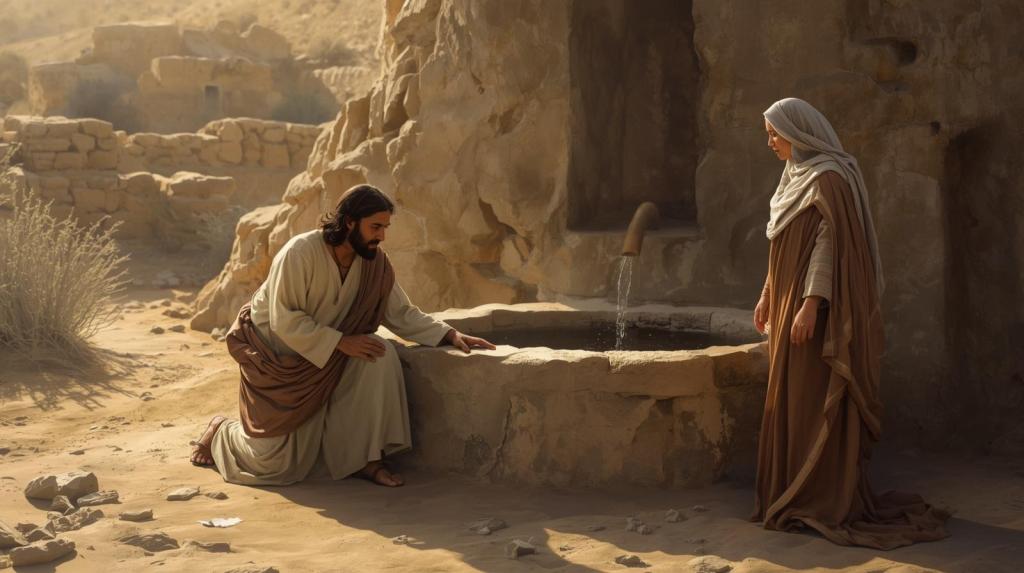
Perhaps you’re reading this and you see yourself in this woman’s story. Maybe you feel unworthy, ashamed, or disqualified. Maybe you’ve been hiding, avoiding the heat of the day in your own way. Or perhaps you’ve already encountered Jesus, but you’re resisting the confrontation—unwilling to face the truth about areas of your life that need to change.
I want to encourage you: Jesus meets you right where you are. He’s not shocked by your past or put off by your present. But He loves you too much to leave you there. He will confront you with truth, not to condemn you, but to set you free.
The path of encountering Jesus requires confronting the truth. It’s uncomfortable. It’s humbling. It requires leaving things behind. But the transformation is worth it. The life He calls you into is worth it. The testimony you’ll carry is worth it.
Don’t give up when you don’t understand. Don’t walk away when the truth makes you uncomfortable. Keep seeking, keep questioning, keep moving forward. Your turning point may be just around the corner.
What waterpot is Jesus asking you to leave behind today? What truth is He inviting you to confront? Where is He calling you to step out in faith, even when you don’t fully understand?
The same Jesus who met the Samaritan woman at the well is meeting you today. Will you let Him transform your shame into testimony? Will you leave the waterpot behind and step into your calling?
Your encounter with Jesus awaits. And on the other side of confronting the truth lies freedom, purpose, and a testimony that will impact generations.
 Jrevolution